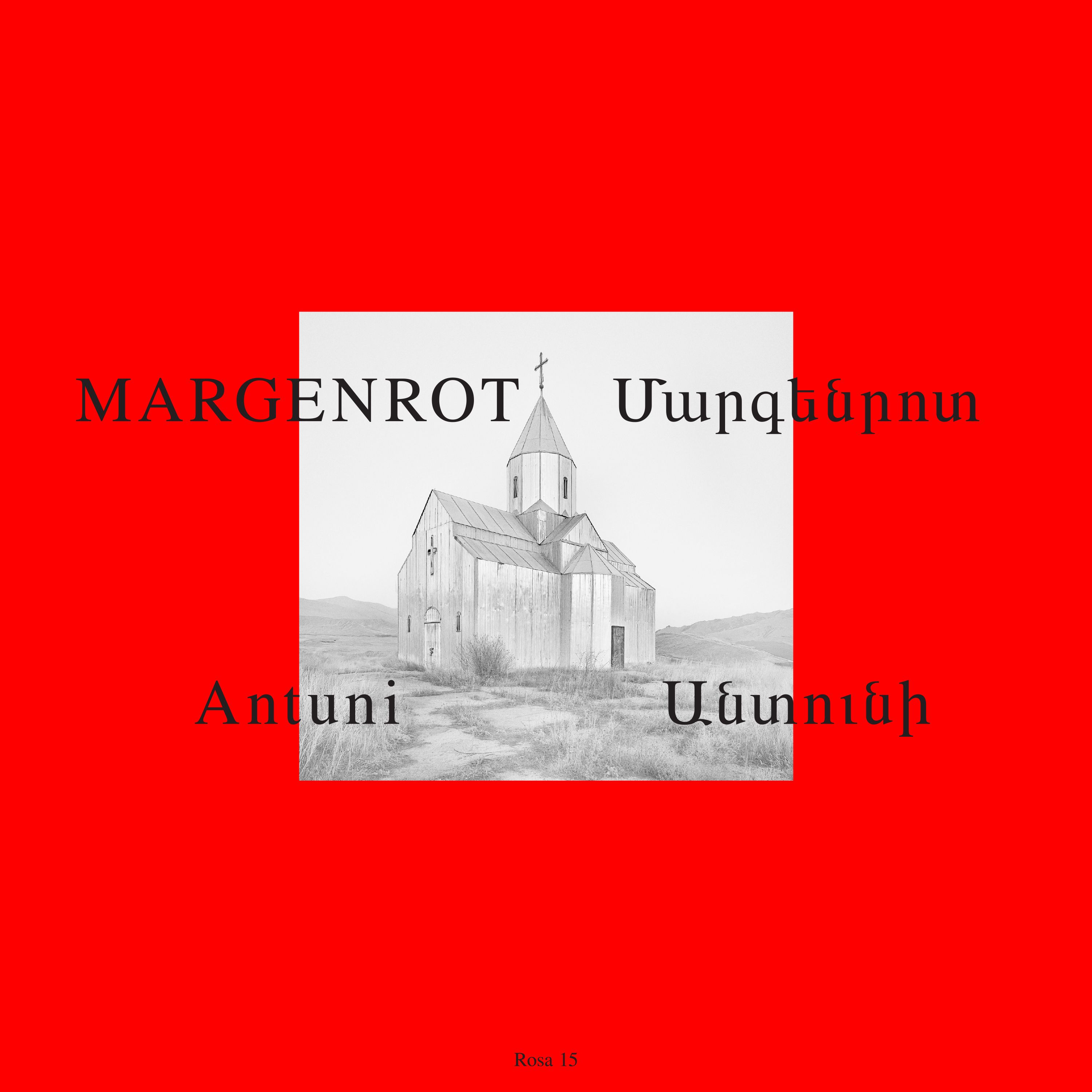
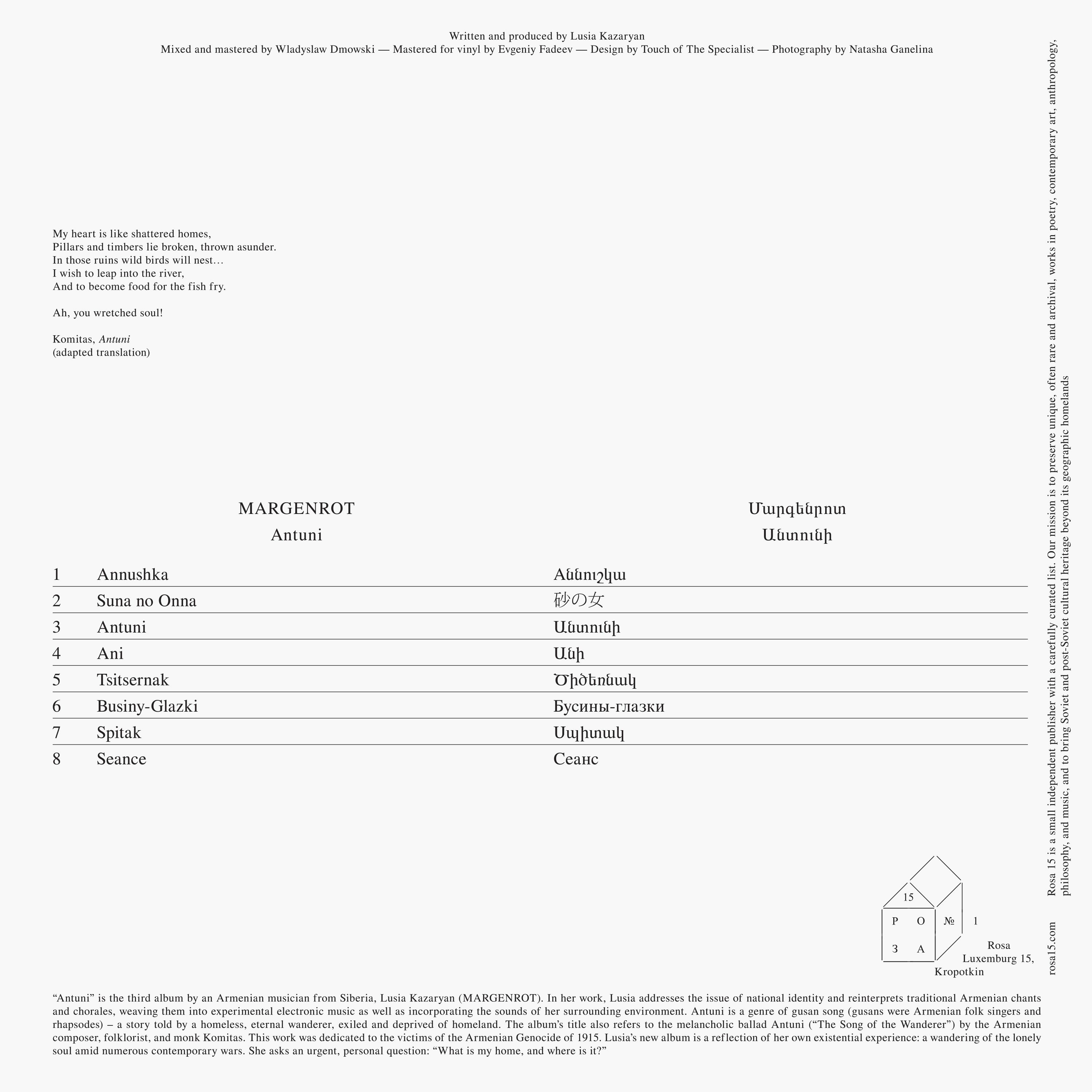
Antuni (translated from Armenian as “homeless”) was created over five years. It is a personal statement about fragility, vulnerability, and the search for grounding in a world where conflict has become part of everyday life. Antuni is a genre of gusan song (gusans were Armenian folk singers and rhapsodes) – a story told by a homeless, eternal wanderer, exiled and deprived of homeland.
The album’s title also refers to the melancholic ballad Antuni (“The Song of the Wanderer”) by the Armenian composer, folklorist, and monk Komitas. This work was dedicated to the victims of the Armenian Genocide of 1915. Lusia’s new album is about national identity and inner wandering – between contemporary wars and deeply personal, existential experiences. She asks an urgent, personal question: “What is my home, and where is it?”
The album weaves together traditional Armenian chants and chorales with electronic music and field recordings. Breakbeat is layered with conversations between Lucy’s relatives about the fading village of Naokhrebi (an Armenian village in Georgia), while samples of Komitas’ liturgy, recorded in a Catholic church, contrast with fractured rhythms.
Margenrot is the solo project of Armenian musician Lusia Kazaryan, originally from Siberia, launched in 2015. Margenrot operates at the intersection of experimental electronic music and cultural storytelling. Across her releases, the project draws on Armenian mythology, post-Soviet sonic landscapes, and lived experience, including war, displacement, and personal memory, evolving from dense, industrial textures toward more spacious compositions with elements of breaks, dub, and orchestral layering.
Earlier in her career, she performed digital hardcore and was the vocalist
of the female noise-rock band “Fanny Kaplan”, and worked as a correspondent for a human rights organization. In recent years, she lived in an anthroposophical community, an experience that influenced the creation of her latest album. She also composes music for documentary and fiction films.
Part of a new generation of Armenian artists working internationally, Lusia explores unexpected combinations of sound, blending digital and analog textures, acoustic instruments and sound design, and bringing together Eastern and Western cultural references to create new sonic narratives.
Digital album will be released on June 1, 2026 and vinyl release on June 20, 2026.